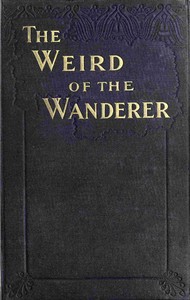
The weird of the wanderer : $b Being the papyrus records of some incidents in one of the previous lives of Mr. Nicholas Crabbe
by Frederick Rolfe (1860–1913)
- 14chapters
- 81,564words
- 5 h 55 minto read
- 24,530downloads
The weird of the wanderer by Frederick Rolfe and C. H. C. Pirie-Gordon is a novel written in the early 20th century. Framed as “papyrus records” discovered in a rock-tomb, it blends occult fantasy with classical and archaeological intrigue, following Nicholas Crabbe—presented as the reincarnation of Odysseus—whose magical rites propel him back into antiquity to live as King Balthazar. Expect a heady mix of time-slip, reincarnation, and esoteric ritual, all mediated by scholarly notes and letters that heighten the tale’s found-manuscript verisimilitude. The opening of The weird of the wanderer presents a prologue of letters describing an Armenian rock-tomb unearthed with startling anachronisms—a modern revolver and watch beside a perfectly preserved youth—along with papyri for scholarly translation. The translated “papyri” then begin in the first person: Crabbe, also Odysseus and King Balthazar, swears a solemn oath and recounts his occult training, a Nile voyage for ritual tools, and a moonlit ceremony at Korte where he endures a scorching-staff ordeal to summon Amenemhat, a priest of Tanis, as his familiar. Guided to Thebes’s hidden subterranean halls, he crosses an underground river to a radiant white temple, dismisses a ragged ghost-warden, and repeats the ordeal to invoke a greater power. Near death, he experiences a visionary unmooring of his senses and a backward rush through time’s “rolling wheels,” hears a voice granting him multiple lives, and witnesses the gods of Egypt. Recovering, he finds the temple newly draped and realizes he has slipped back many centuries; he conceals his modern effects, emerges into ancient Thebes under Ptolemy Auletes, overawes Macedonian guards, and hires a barge by summoning crocodiles, setting his course downstream despite reports of mutinous mercenaries. This is only the beginning, positioning Crabbe at the threshold of adventures in Ptolemaic Egypt.
Chapters
14 total- 1Preface7,116 words
- 2Preface (cont. 2)7,134 words
- 3Preface (cont. 3)7,331 words
- 4Preface (cont. 4)7,103 words
- 5Preface (cont. 5)7,170 words
- 6Preface (cont. 6)7,104 words
- 7Preface (cont. 7)7,152 words
- 8Preface (cont. 8)7,102 words
- 9Preface (cont. 9)7,128 words
- 10Preface (cont. 10)7,144 words
- 11Preface (cont. 11)5,842 words
- 12PART 2.--Historical: The Philosophical Aspect of Death and Immortality. The Theological Aspect of Death. The Common Arguments for Immortality.1,566 words
- 13PART I.--The Occult Sciences, comprising Astrology, Palmistry, Thaumaturgy, Kabalism, Numerology, Talismans, Hypnotism. — PART II.--The Occult Arts, comprising Divination, The Tarot, Cartomancy, Crystal Gazing, Clairvoyance, Geomancy, Dreams, Sortileges, Alchemy.522 words
- 14PART I.--The Principles of Hygiene. Body, Soul and Spirit. Varieties of Health. How to Preserve Health. How to Keep Young. What to Do. — PART II.--The Practice of Hygiene. On Children’s Health. A Man’s Health. A Woman’s Health. Health in Advanced Life. How to Restore Health. Index.2,150 words
No chapter matches your search.
You might also like
Alice's Adventures in Wonderland
Lewis Carroll
Fantasy
Dracula
Bram Stoker
Fantasy
The King in Yellow
Robert W. (Robert William) Chambers
Fantasy
The Wonderful Wizard of Oz
L. Frank (Lyman Frank) Baum
Fantasy
The Works of Edgar Allan Poe — Volume 2
Edgar Allan Poe
Fantasy
The call of Cthulhu
H. P. (Howard Phillips) Lovecraft
Fantasy